There is a particular kind of exhaustion that has nothing to do with sleep. It is the tiredness of people who have done too much for too long in service of goals they never quite chose. You recognise it in yourself when you cannot remember the last time you finished a meal without glancing at your phone. When rest feels like a problem to be solved rather than a state to inhabit.
We have built an entire civilisation on the premise that more is better. More output, more efficiency, more productivity. And for certain problems — growing food, building infrastructure, curing disease — this has served us extraordinarily well. But somewhere along the way, we began applying this logic to our inner lives. We started optimising for things that cannot be optimised: attention, presence, meaning.
The Busyness Trap
Busyness has become a status symbol. When someone asks how you are, the correct answer, in most professional settings, is some variation of "busy." To say you have been spending your afternoons walking slowly through the park, noticing things — this would seem almost confessional. Suspicious, even. What are you hiding behind all that leisure?
But the busyness trap is subtler than it first appears. It is not simply that we do too much. It is that we have lost the capacity to discern between what matters and what merely fills time. Every notification, every meeting, every task added to a list is a form of delegation — we are allowing the external world to determine how our hours are spent. We say yes to things not because they are meaningful but because saying no feels dangerous. Impolite. Lazy.
"The greatest threat to our plans is not failure. It is the slow accumulation of small yeses that crowd out the life we actually wanted."
Philosopher Blaise Pascal wrote in the seventeenth century that "all of humanity's problems stem from man's inability to sit quietly in a room alone." He was being provocative, as philosophers tend to be. But the observation lands differently in an era of infinite scroll and algorithmic feeds — environments designed with the explicit purpose of preventing you from sitting quietly in any room at all.
What Less Actually Means
Doing less is not the same as doing nothing. This is the misunderstanding that causes people to dismiss the idea before they have truly considered it. Less does not mean abandoning ambition, neglecting responsibilities, or retreating from the world. It means becoming more deliberate about where you place your attention — and more honest about the cost of placing it everywhere at once.
In practice, doing less often looks like doing one thing properly rather than three things adequately. It looks like finishing a conversation before starting another one. It looks like cooking a meal slowly on a Tuesday evening because there is something nourishing in the process itself, not just the outcome.
There is a concept in Japanese aesthetics called ma — the meaningful pause, the intentional space between things. It shows up in music, in architecture, in conversation. In a piece of music, ma is the silence between the notes. Remove it and you have not more music — you have noise. The same principle applies to a life. The pauses are not wasted time. They are where meaning accumulates.
The Practice
None of this is particularly radical in theory. The challenge is application — living it out in the specific, ordinary texture of a real day, with real obligations and real people who expect things from you.
Here is what I have found useful, not as rules but as orientations:
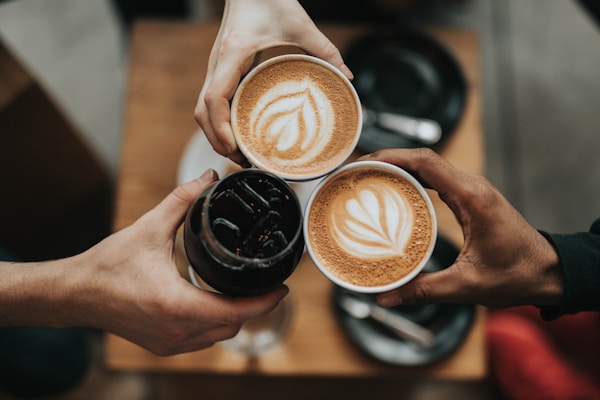
Protect the morning. The first hour or two of the day, before the world arrives with its demands, is the time when you are most yourself. Guard it. Use it for the thing that matters most to you — reading, writing, walking, sitting quietly with your coffee — rather than immediately consuming the opinions and emergencies of other people.
Let some things go undone. Not everything. But something. Every day, there will be a task on your list that would be nice to complete but does not actually need to be done today. Leave it. Notice what happens when you do not rush to fill every available moment with productivity.
Practice the considered no. When someone makes a request of your time, resist the reflexive yes. Give yourself permission to say: "Let me think about that." Then actually think about it. Ask whether saying yes moves you toward the life you want to be living, or simply adds another obligation to a pile that is already heavy.
Finish things. Read the book to the end. Finish the conversation. Eat the meal without doing something else simultaneously. Completion is a form of respect — for the thing itself and for your own attention.
A Quieter Kind of Ambition
There is a life available to us that is less frantic and more full. These are not opposites — fullness and freneticism — though our culture has conspired to make us believe they are. The richest experiences most of us can recall are rarely the busiest: they are the slow dinner that stretched into the small hours, the afternoon that had nowhere particular to go, the conversation that felt like it mattered.
What would it mean to build a life that felt like that more often? Not perfect stillness — that is neither possible nor desirable. But something slower. Something chosen. A life where you can, from time to time, sit quietly in a room alone and find it sufficient.
That is not a modest ambition. It might be the most demanding one there is.